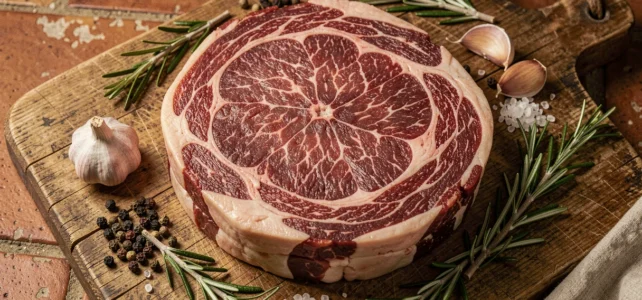
The round of vein is a cut from the flank, located in the thigh of beef or veal. Rich in connective tissue and collagen, it becomes tender only if the cooking respects its fibrous structure. This piece, often sold at a price much lower than the tenderloin or rump steak, rewards those who master a few precise technical gestures.
Drying and salting the round of vein before cooking
The surface of moist meat does not brown. The water that stagnates on the surface turns into steam when it contacts the pan, preventing the Maillard reaction, the chemical transformation responsible for the golden crust and grilled aromas.
The most effective gesture is to dry the meat uncovered in the refrigerator for several hours before cooking. Place the round of vein on a rack, without plastic wrap, and let the cold air dehydrate the surface. The next day, the piece is ready to be seared without sticking to the pan.
Salting follows the same logic of anticipation. Salting at least an hour before cooking, or even the night before for a thick piece, allows the salt to penetrate deeply. It modifies the structure of the muscle proteins, which then retain their water better during cooking.
Late salting draws juices to the surface without reabsorbing them, which harms the final tenderness. By combining these two preparations, you will achieve a more flavorful result than with any last-minute seasoning.
When it comes time to prepare a flavorful round of vein, these two preliminary steps make all the difference between gray meat that releases water and a piece that is golden with concentrated flavors.
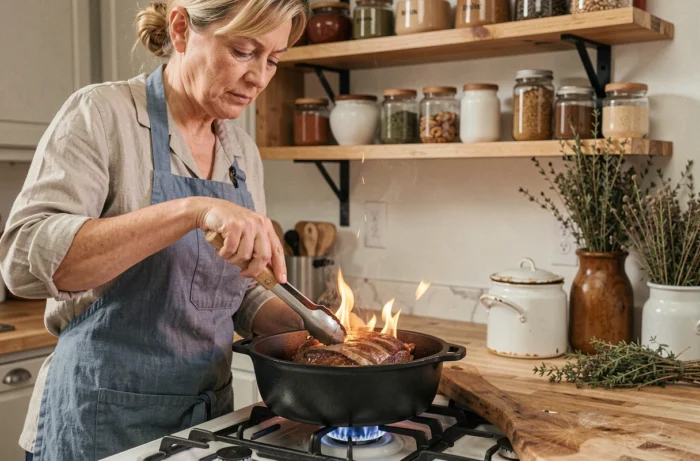
Searing the round of vein in a pan without overcrowding
Searing is the moment when flavor is built. Too many amateur cooks place several pieces in the same pan, which lowers the temperature and creates a steaming effect. The meat releases its water instead of caramelizing.
Cooking in small quantities in a very hot pan is the rule to follow. If your round of vein is cut into pieces for a stew, proceed in two or three batches. Each side should be left undisturbed for at least two minutes.
- Use a cast iron or stainless steel pan, not a non-stick pan which limits browning at high temperatures.
- Add a fat that can withstand heat (grapeseed oil, peanut oil, or clarified butter).
- Only turn the meat when it releases itself, a sign that the crust has formed.
- Deglaze the bottom of the pan with red wine or broth to capture the juices, which will serve as the base for the sauce.
This initial browning is not meant to cook the meat through. It creates an aromatic envelope that will be preserved during the long cooking process.
Slow cooking of the round of vein: temperature and duration
The round of vein contains a significant amount of collagen. This structural protein, tough and chewy when raw, transforms into melting gelatin when exposed to moderate heat for a sufficient time. Cooking too quickly or too intensely contracts the fibers and dries out the meat.
For an oven braise, a low temperature yields the best results. Cover the pot and let time do its work. The meat should shred easily with a fork, indicating that the collagen has melted properly.
Checking the doneness with a thermometer
Time alone guarantees nothing, as the thickness of the piece, the oven temperature, and the type of pot affect the outcome. A probe thermometer inserted into the center of the meat remains the most reliable tool.
For a veal round of vein, some preparations aim for a medium-rare or medium doneness. The internal temperature is a better substitute for the timer to avoid overcooking, a common flaw with this cut. If you are preparing a beef braise, the logic is reversed: cooking should be extended until the fibers completely yield.
Resting after cooking and sauce base with round of vein
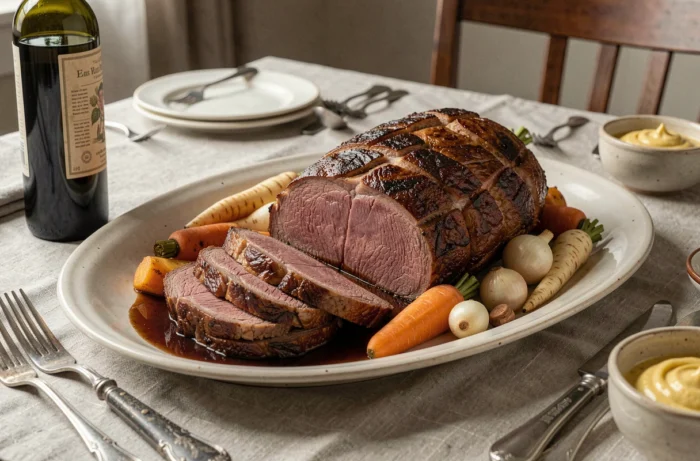
Removing the meat from the heat does not mean serving it immediately. During cooking, the heat pushes the juices toward the center of the piece. Resting for a few minutes outside the pot allows these juices to redistribute evenly throughout the meat. The resting makes the round of vein more tender and prevents a flood of juices from flowing out when sliced.
Cover the piece with a sheet of aluminum foil without tightening it, to retain heat without softening the crust. In the meantime, you can concentrate the cooking juices over high heat to create a natural sauce, rich in flavors and gelatin.
Deglazing and side vegetables
The braising base contains all the juices, aromatics, and cooking fat. A splash of red wine or vinegar added to the hot pot loosens the caramelized residues. Reduce this sauce to the desired consistency, then adjust the seasoning with pepper and, if necessary, a pinch of salt.
Root vegetables (carrots, parsnips, celery) simmered in the same juice absorb the flavors of the meat. Added at the end of cooking, they maintain a pleasant texture without falling apart.
The round of vein requires neither expensive equipment nor chef techniques. Drying, advance salting, searing without overcrowding, and slow cooking form a logical sequence where each step prepares the next. The only variable that the recipe does not control is the quality of the piece: ask your butcher for a well-marbled cut, a sign of an upbringing that allowed the animal to develop properly.