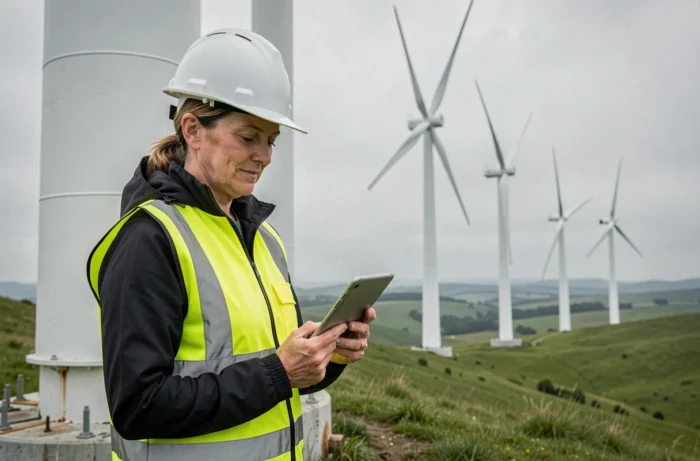
Installing solar panels or connecting a wind farm is not enough to succeed in the transition to renewable energy. The real bottleneck today is downstream: the electrical grids are not keeping pace with the new installations. Understanding this gap allows for making the right choices, whether one is a community, a business, or an individual.
Electrical Grid and Renewable Energy: The Overlooked Bottleneck
Have you ever noticed that a traffic jam doesn’t come from the number of cars manufactured, but from the capacity of the roads? The electrical grid works the same way. We can multiply solar and wind farms, but if the transmission and distribution lines are not sized accordingly, the electricity produced remains stuck.
In Europe, the queue of renewable projects waiting for connection reaches about 1,700 GW according to Renewable Energy World. This figure far exceeds the current installed capacity. The plants are ready, permits are sometimes granted, but connecting to the grid takes years.
The concrete result: in 2024, more than 10 TWh of renewable electricity would not have been usable in Europe, according to an analysis reported by Euronews. This electricity has been “curtailed,” meaning it was intentionally reduced due to lack of space on the grid. Producing clean energy only to waste it represents a costly paradox, both financially and climatically.
Resources like those available on ag-energie.org help to better understand the energy sectors and the technical constraints that accompany each source of production.
RED III Directive: What the New European Regulatory Framework Changes
To unblock the situation, the European Union has revised its rules. The RED III directive raises the binding target for the share of renewable energy in final consumption. It also mandates an acceleration of administrative authorization procedures.
Specifically, member states must designate “acceleration zones” where the processing times for renewable projects are shortened. The idea is simple: in these pre-identified zones, a project can obtain its permit in one year instead of several years.
Why Administrative Delays Hinder the Energy Transition
A land-based wind farm often takes longer to obtain its permits than to be built. Each year of delay pushes back the reduction of greenhouse gas emissions and increases the costs for the project developer. The RED III directive aims to break this cycle by imposing time limits on procedures.
Anticipated reinforcement of the grids is also included in the recommendations. Planning the grid simultaneously with production installations, rather than afterward, would avoid part of the curtailment described above.
Energy Storage and Flexibility: The Operational Conditions of a Renewable Mix
Solar produces when it is daylight, wind when it is windy. This intermittency is often presented as a dealbreaker. In reality, the problem is not the intermittency but the lack of flexibility to respond to it.
Flexibility relies on three complementary pillars:
- Battery storage, which absorbs excess solar production during the day to release it in the evening when demand increases.
- Cross-border interconnections, which allow for exporting excess electricity to a neighboring country where demand is higher, instead of curtailing it.
- Demand management, which involves shifting certain electrical uses (vehicle charging, water heating, industrial processes) to times when renewable production is abundant.
Without these three combined levers, increasing the share of renewable energy in the electricity mix quickly reaches a technical ceiling. Building solar panels without investing in storage is like filling a bathtub without a plug.

Storage Technologies: Beyond Lithium-Ion Batteries
Lithium-ion batteries dominate the market, but other technologies are emerging. Compressed air storage, flow batteries (vanadium, zinc-bromine), or gravitational storage offer longer discharge durations, suitable for needs spanning several hours.
The choice of technology depends on the local context: required storage duration, available space, operating costs. There is no universal solution, and the diversification of storage technologies mirrors the logic of diversifying production sources.
Sustainable Energy Transition: What Distinguishes a Viable Project from a Stalled One
Many renewable energy projects fail not for technical reasons, but due to sequencing issues. Launching production before securing the connection, sizing storage afterward, or underestimating local acceptance are common mistakes.
A sustainable energy transition project follows a precise order:
- Study of the available grid capacity before choosing the production site.
- Integration of storage and flexibility from the design phase, not as an option.
- Local consultation in advance to anticipate opposition related to landscape, noise, or land use.
- Anticipation of the regulatory framework, particularly the acceleration zones provided by RED III, to reduce timelines.
Projects that adhere to this sequence reach their nominal capacity more quickly and limit the additional costs associated with administrative delays or unforeseen connection work.
Reducing carbon emissions related to fossil fuels requires this operational rigor. The climate goals set at the international level will only be achieved if each renewable project is designed as a complete system, from production to delivery to the consumer. The energy transition is as much about cables as it is about solar panels.