
A Saturday afternoon without plans, an evening that stretches on, a week off without reservations: we all know that moment when free time becomes a void to fill rather than a resource. The classic reflex is to scroll through a list of leisure activities on a search engine, get lost in it, and end up doing nothing.
The real challenge is not to find an idea, but to choose one that fits the constraints of the moment: budget, weather, number of people, available energy.
Leisure activities to try when you have less than two hours
We underestimate the number of things that can be done in a short time slot. The time constraint forces us to choose compact formats, and it is often there that we discover a new pleasure.
An express cooking workshop (pastry, sushi, sourdough bread) lasts between an hour and a half and two hours in most establishments. You leave with a tangible result and a technique that can be reused that same evening. Small group workshops, limited to six or eight people, offer real follow-up from the instructor.
The escape room remains a safe bet for a group of friends. A session lasts one hour, including briefing. The rooms regularly renew their scenarios, allowing you to return without getting bored. Feedback varies on difficulty depending on the establishments, so it’s worth checking recent reviews before booking.
If you prefer to stay solo, a themed urban walk (street art, architecture, history of a neighborhood) only requires a charged phone and good shoes. Several cities like Lyon offer free marked routes, downloadable as PDFs from tourist offices. To explore other options based on your city or desires, you can find out more on Zetop.fr, which lists a wide range of activities by category.
Creative and manual hobbies: moving beyond the beginner stage
Handicraft has made a strong comeback in recent years, driven by video tutorials and the proliferation of in-person workshops. The trap is to flit from one hobby to another without ever making progress.
Choosing a single discipline and sticking to it for three months radically changes the experience. Pottery, bookbinding, sewing, watercolor: the learning curve becomes rewarding once you get past the initial failures. A weekly class structures progress better than irregular practice at home.
Here are some criteria for selecting a creative workshop worth attending:
- The participant/instructor ratio: beyond ten people per instructor, individual follow-up disappears, and you find yourself following a pattern without explanation
- The materials provided on-site: a good workshop includes raw materials in the price, which avoids investing before knowing if you like the discipline
- The possibility of continuing independently: some places offer free access to their tools (ceramic kiln, industrial sewing machines) between classes
For those who prefer to learn from home, online course platforms now cover embroidery, leatherwork, marquetry. The video format allows you to rewind as much as needed, a clear advantage over group classes where the group moves at the same pace.
Enjoying free time outdoors without breaking the bank
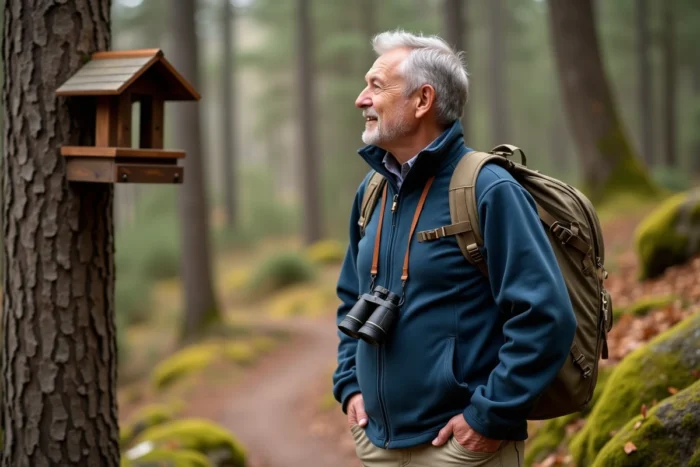
Since the pandemic, local authorities and associations have invested in accessible outdoor facilities: marked trails, health courses, nature adventure parks. Projects like the Coop de l’Arrière-Pays explicitly aim to structure a nature-adventure hub rooted in its territory, open to all levels.
The Ministry of Health recommends at least thirty minutes of dynamic physical activity five days a week for adults. Walking, cycling, gardening, or active games count towards this total. You don’t need a gym membership to reach this threshold.
Here are some outdoor activities that cost almost nothing:
- Hiking on marked trails (GR, PR): topoguide books cost around fifteen euros and are useful for dozens of outings. Free GPS apps are sufficient for the most frequented routes
- Geocaching: a global and free treasure hunt, feasible in both urban and forest settings, with an active community that regularly updates caches
- Orienteering in a municipal forest: several clubs offer maps at a pay-what-you-want rate, and the activity can be done alone, as a couple, or with family
- Organized picnics with group games (petanque, molkky, badminton): gather friends for a minimal cost, and the logistics fit in a backpack
Activities to do with friends or solo: adapting the format to the situation
You don’t look for the same thing when you want to occupy a rainy Sunday alone and when you’re organizing an outing for six. The number of participants radically changes the type of relevant activity.
Solo, learning hobbies work better: language classes, museum visits with audioguide, reading in a library, outdoor drawing sessions. Solitude removes negotiation and allows you to go at your own pace. It’s also the best context to try an activity without the pressure of others’ gaze.
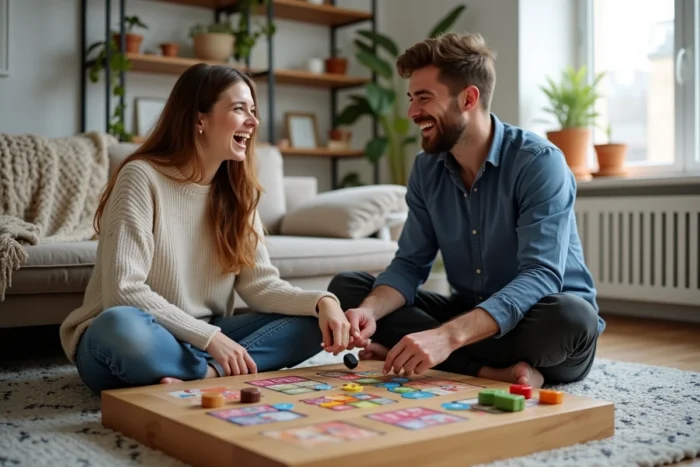
In a group, we shift to interactive formats. A tasting workshop (wine, cheese, specialty coffee) serves as both a social outing and a taste discovery. Modern board games (cooperative, narrative, investigative) have exploded in variety and quality, and a game night costs the price of a reusable box indefinitely.
For larger groups, a private guided tour of a neighborhood or heritage site creates a more memorable shared experience than a restaurant. Tourist offices connect you with local guides, sometimes volunteers, who know anecdotes absent from the classic circuits.
Free time and leisure physical activity: the right balance
The Pass’Sport program, renewed for the upcoming season in France, specifically targets adolescents around fourteen years old, the age when sports participation declines. For adults, the main barrier is not financial but organizational: finding a regular time slot and sticking to it.
Racket sports (badminton, table tennis, padel) offer a clear logistical advantage. A session lasts between forty-five minutes and an hour, reservations are made online, and you can play with two people without depending on a minimum number of participants. Padel attracts many beginners thanks to its simple rules and smaller court than tennis.
Swimming, running, cycling: these three activities remain the most practiced because they do not depend on a partner or fixed schedule. They fit into any schedule, making them sustainable hobbies rather than attempts abandoned after three weeks.
The best hobby, after all, is the one you’re still doing in six months. It’s better to have a modest but regular activity than an ambitious project that ends up as equipment stored in the garage.