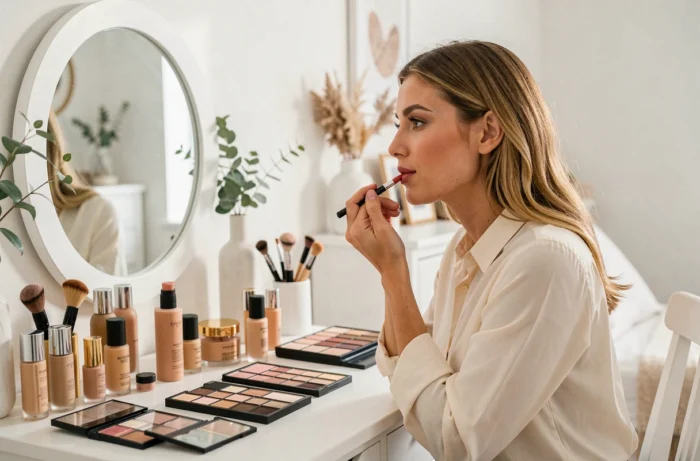
Buying makeup online seems simple: a few clicks, a cart, a delivery. The difficulty lies elsewhere. Between products resold by third parties without clear traceability, opaque compositions, and unverifiable marketing promises, choosing a reliable online store requires a minimum of method. Here are concrete guidelines to guide your online makeup purchases.
Composition and allergens: what the product sheet must display before purchase
You may have noticed that some online stores display the complete INCI list of a foundation, while others only provide a marketing description? This difference is not insignificant.
European regulations require distance sellers to display, before ordering, the identity of the manufacturer, the contact details of the responsible person in the European Union, product identification, and applicable warnings. This information should not only appear on the packaging received after delivery. A site that hides this data before purchase does not meet its obligations.
The stakes will soon become higher. The list of fragrance allergens to be declared on cosmetics will increase from 26 to over 80 substances, in accordance with Regulation (EU) 2023/1545. For reactive skin or individuals prone to contact allergies, being able to read the detailed composition before adding a mascara or lip care to the cart becomes a criterion for choosing the seller, not just the product.
A simple reflex: if the product sheet does not mention either an ingredient list or the manufacturer’s contact details, move on to another site.
Reliability of online makeup sellers: three quick verification points
The low price of a lipstick or an eyeshadow palette is attractive, but it can also signal a counterfeit product. A British study by the IPO highlights that major marketplaces concentrate an increasing share of potentially counterfeit products. Consumers particularly avoid counterfeit beauty and hygiene products applied directly to the skin, and for good reason: a fake foundation may contain uncontrolled substances.
To order your makeup products with confidence, you can go through the site makeupme.fr for your verified cosmetics purchases, or apply these checks on any store:
- Does the seller display a SIRET number or a physical address in Europe? A dropshipping reseller based outside the EU complicates any recourse in case of a problem.
- Do customer reviews focus on concrete details (texture, wear, skin reaction) or do they resemble generic copy-pasted comments? Detailed reviews indicate a community of real buyers.
- Does the site offer a clear right of withdrawal and accessible customer service? The absence of these mentions is an immediate warning signal.
Green claims and organic makeup: distinguishing proof from slogans
The mentions “natural,” “clean,” or “eco-friendly” are multiplying on online beauty stores. An ecological claim without verifiable proof is now a legal risk for the seller, and a trap for the buyer.
The European directive against greenwashing tightens the rules on cosmetics. For a site to display “environmentally friendly formula” on a mascara or face care product, it must rely on documented evidence accessible to the consumer.
Practical guidelines for verifying a claim
Look for a recognized label (Cosmos Organic, Ecocert, Natrue) rather than a self-declaration from the seller. A clickable certification logo that links to the verifying body is more reliable than a decorative green pictogram.
Also, check the overall consistency of the catalog. A site that sells both certified organic ranges and products with no mention of origin does not have the same standards as a specialized store that selects each reference.
Online makeup routine: adapting the choice of site to your real needs
Not all online stores target the same use. The best makeup site depends on what you are looking for, not on a universal ranking.
For a daily routine (foundation, mascara, lip care), generalist sites with a wide catalog allow you to group everything in one order. The gain comes from shipping costs and the ability to compare prices between brands.
For a specific need (sensitive skin, professional makeup, rare shades), specialized stores offer a decisive advantage: more precise product advice and complete technical sheets. Some even offer an online skin diagnosis before recommending a foundation or concealer suitable for your complexion.
What really changes the final price
The displayed price of a makeup product is not enough to compare two sites. Consider the threshold for free shipping, any loyalty programs, and especially the return policy. A discounted mascara that is non-refundable in case of a skin reaction costs more than it seems.
Also check for web exclusives. Several brands reserve certain references or sets for their online store, with formats or product combinations that cannot be found in physical stores.
Makeup and marketplace: precautions against third-party sellers
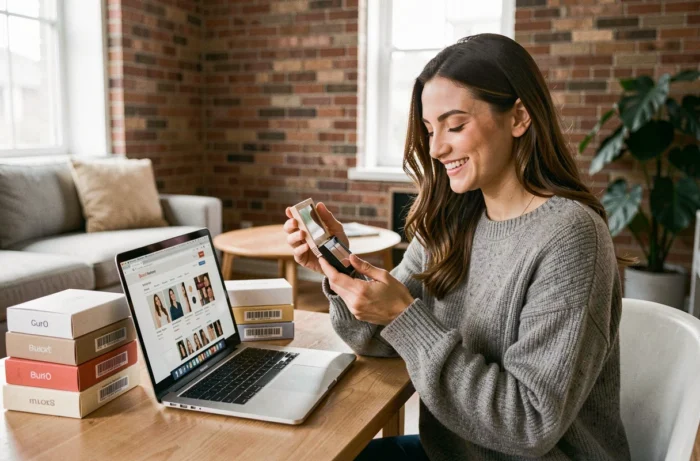
On major platforms, the beauty product you buy is not always sold by the marketplace itself. A third-party seller on a marketplace does not offer the same guarantees as the official site of a brand.
European regulations require that each cosmetic advertisement sold at a distance displays regulatory information before ordering. On a marketplace, this obligation falls on the third-party seller, not the platform. In practice, many listings remain incomplete.
- Check that the seller is properly identified with a trade name and a country of establishment in the EU.
- Compare the price with that on the official brand site: a significant discrepancy may indicate a diverted product or one close to its expiration date.
- Prefer sellers with a verifiable sales history and reviews specifically related to the beauty category.
Online makeup offers convenient access to thousands of references for eyes, lips, face, or skincare. The trade-off is that the responsibility to verify the reliability of the seller largely rests on you. A site that clearly displays its compositions, legal obligations, and return conditions deserves your trust; others deserve your caution.