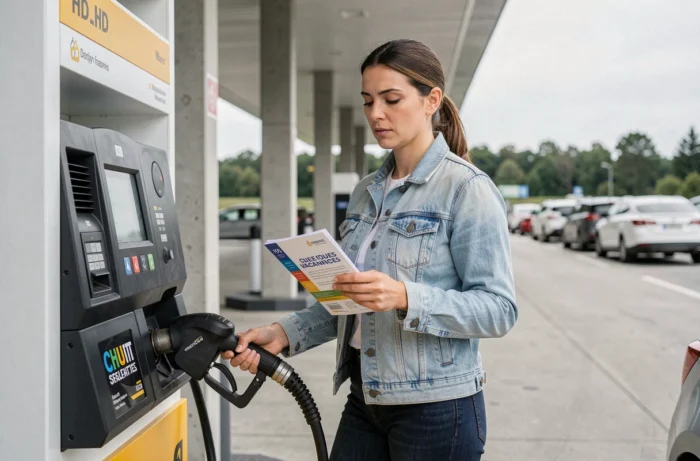
ANCV holiday vouchers are used to finance accommodation, leisure activities, and transportation related to vacations. Their use for paying for fuel at gas stations remains a topic that generates a lot of confusion. The regulatory framework generally excludes gasoline from the scope of this payment title, but several indirect mechanisms allow for reducing the fuel bill for a vacation trip.
Fuel and ANCV holiday vouchers: what the legal framework says
Holiday vouchers were designed to cover services related to tourism, leisure, and vacation transportation. Traditional gas stations (large distribution networks, independent stations in cities) are not part of the professionals affiliated with the ANCV network. Fuel is not an eligible service for holiday vouchers in the vast majority of cases.
The reason lies in the status of fuel distributors. To accept holiday vouchers, a business must be contracted with the ANCV and offer a service of a tourist or leisure nature. A gas pump on a ring road does not meet this criterion.
However, certain brands located at highway rest areas or attached to tourist complexes may be affiliated with the network. The possibility of paying for gasoline with holiday vouchers therefore directly depends on the location and type of station concerned.
Tolls and electronic toll badges: the real way to manage travel budgets
While direct payment for gasoline remains marginal, holiday vouchers find their utility in another area of the road budget: highway tolls. This is even the most concrete lever to lighten the bill for a car trip.
ANCV Connect and electronic toll credit
With the rise of the dematerialized format Chèques-Vacances Connect, toll payments are now made via an electronic toll badge. The principle: convert paper holiday vouchers into ANCV Connect balance, then credit this balance to a badge account (Ulys, for example). The badge then automatically debits this credit when passing through toll booths.
This evolution has a direct practical consequence. It is no longer possible to present a paper holiday voucher at the toll booth on most highways. Payment is transferred to the badge, not to the gas station.
The combination of tolls with holiday vouchers and gasoline with a credit card
For a vacation trip, the optimization strategy that emerges is simple:
- Highway tolls are paid via the electronic toll badge funded with ANCV Connect, freeing up the credit card budget
- Gasoline is paid for with a regular credit card, possibly taking advantage of the cheapest stations identified on online comparison sites
- The remaining holiday voucher balance is used for accommodation, dining, or activities on-site
This division between tolls and fuel represents the most realistic optimization method for a motorist going on vacation with holiday vouchers in hand.
ANCV affiliated stations: special cases to know
There are a few situations that still allow the use of holiday vouchers for fuel or purchases at stations. They remain marginal but are worth identifying.
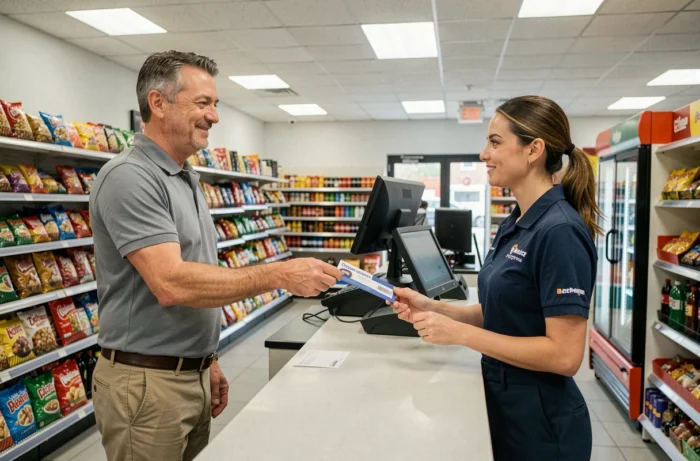
Some highway rest areas include shops or dining areas contracted with the ANCV. In these cases, the holiday voucher covers purchases in the shop or dining on the rest area, not the fuel itself. The distinction is subtle, but it matters: a sandwich or coffee paid for with a holiday voucher at a rest area means euros saved on the overall trip budget.
Some food distribution brands affiliated with the ANCV (like certain Carrefour stores) accept holiday vouchers for specific departments (leisure ticketing, travel). Fuel at the adjacent station is not covered by this acceptance.
Chèques-vacances Connect: what changes for payments on the go
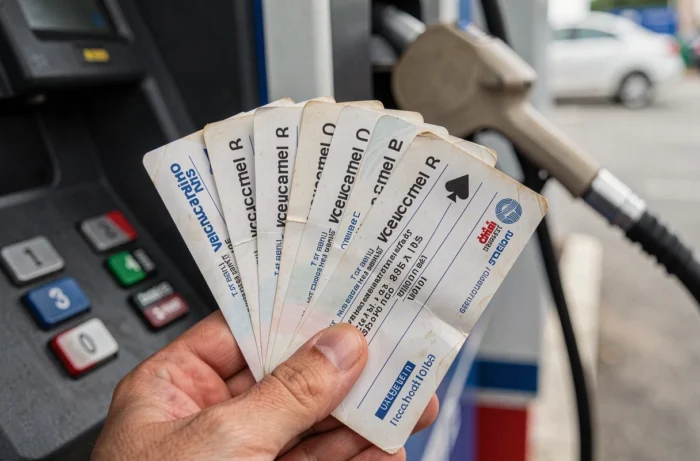
The dematerialized version of holiday vouchers, called ANCV Connect, is gradually changing the way this payment title is used. The network of affiliated establishments is regularly expanding, and updates to the partner file include new brands.
ANCV Connect works via a QR code or payment link, which eliminates the constraint of the paper voucher. For gas stations, this evolution does not change the fundamental rule (fuel remains outside the scope), but it facilitates payments in affiliated businesses located near roadways.
A point to watch: the ANCV regularly communicates about the expansion of its network. Partnerships with mobility players (long-distance carpooling, vehicle rentals) could eventually change the equation. For now, feedback from the field varies on the actual ease of use of ANCV Connect in small affiliated businesses in rural areas or at secondary rest areas.
Avoid confusion between holiday vouchers and energy vouchers
A common mistake is to confuse the ANCV holiday voucher with the energy voucher. These two systems have nothing in common:
- The energy voucher is a state aid intended to pay domestic energy bills (electricity, gas, fuel) or certain renovation works. It does not cover automotive fuel
- The holiday voucher is a payment title co-financed by the employer, reserved for tourism and leisure expenses
- Neither of them allows for direct payment of a full tank of gas at a standard gas station
Neither the holiday voucher nor the energy voucher covers fuel in the traditional sense. One-off aids like the “fuel voucher” fall under a distinct system, limited in time and subject to income conditions.
The fuel budget for a vacation trip is therefore managed by combining the available tools: tolls via ANCV Connect, price comparison tools to find the cheapest station on the route, and holiday vouchers reserved for the areas where they are actually accepted. This distribution approach remains the most reliable method to make the most of ANCV titles without unpleasant surprises at the pump.