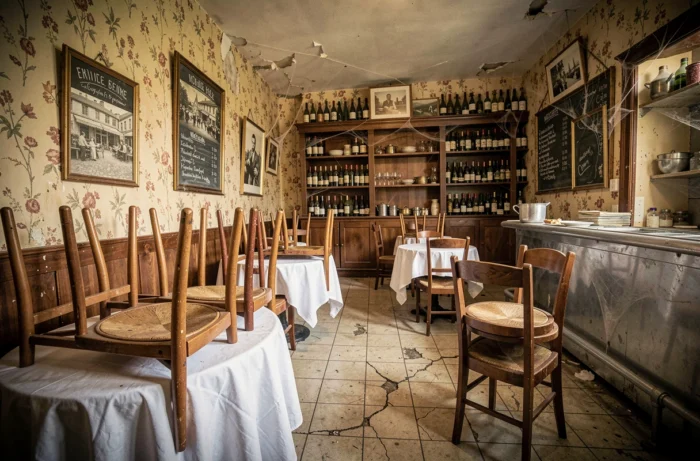
Flunch, Hippopotamus, Courtepaille, Buffalo Grill in its historical form: these brands have accompanied generations of Sunday family meals. Their gradual disappearance from the French urban and highway landscape is not merely a fashion whim. It reflects a profound shift in the restaurant market, where speed now outweighs table service.
Fast food vs traditional dining: the structural shift
Fast food has surpassed traditional dining in terms of the number of outlets and revenue share in France. This reversal, confirmed by INSEE and Gira data from 2024, changes the framework of understanding. Classic French chains have not only lost customers: they have lost their place in the very architecture of the market.
Have you noticed that commercial areas are replacing grills with burger or poke bowl outlets? This is not a coincidence. The model of quick and standardized meals attracts more traffic than the starter-main-dessert menu served at the table. Casual formats, those that sit between fast food and fine dining, are the most vulnerable.
A detailed article on the restaurant chains that have disappeared in France outlines the timeline of these closures and the marks they leave on French culinary culture.
The gastronomic segment, on the other hand, is holding up better. Data observed in June 2026 show an increase in attendance for high-end tables, while casual dining continues to decline. The mid-range is the segment most exposed to closures.
Business failures in the restaurant industry: recent figures
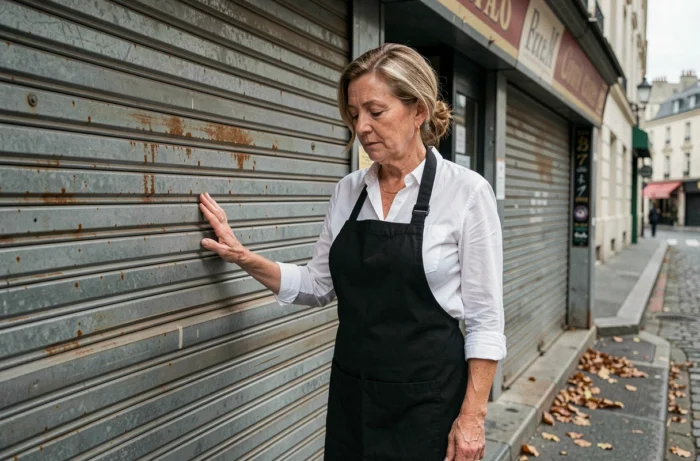
Failures are no longer limited to neighborhood bistros. In the second quarter of 2026, fast food is deteriorating faster than table service in terms of bankruptcies. This turnaround breaks the usual narrative that only traditional establishments are suffering.
Why this phenomenon? Fast food chains, despite their volume, face high fixed costs (commercial rents, payroll, raw materials). When attendance drops, their low-margin model collapses quickly.
For traditional dining, the situation remains tense. According to an industry official cited by the Anadolu agency, about 25 restaurants close every day in France, across all categories. This closure rate weighs on local employment and impoverishes the culinary offerings of medium-sized cities.
Factors accelerating closures
- Inflation on food raw materials, which compresses margins without sales prices always being able to keep up with a clientele that is also under budget pressure
- The repayment of state-guaranteed loans (PGE) taken out during the health crisis, which weighs on the cash flow of many independent and franchised establishments
- The shortage of qualified staff in the kitchen and dining room, which forces some brands to reduce their hours or close sites that have become impossible to operate
Culinary legacy of the disappeared chains: what remains after closure
When a chain like Hippopotamus or Courtepaille closes its last restaurants, it takes with it more than just a logo. It carries away a repertoire of standardized recipes that had, in their own way, democratized certain dishes.
Courtepaille popularized wood-fired grilling in an accessible format, far from premium steakhouses. Hippopotamus established the beef steak as a Sunday dish for millions of families. These culinary references do not disappear overnight, but they lose their means of dissemination.
The recent case of the Paul Bocuse restaurant, an institution near Lyon, illustrates another aspect of the phenomenon. Even establishments backed by a legendary name are not immune to closure. Notoriety alone no longer protects a restaurant from economic pressure.
What new brands take over (or not)
The chains that set up in place of the old ones almost never take over their culinary identity. An old Courtepaille becomes an Asian restaurant or a fast-casual bowl place. The building remains, the gastronomic heritage fades away.
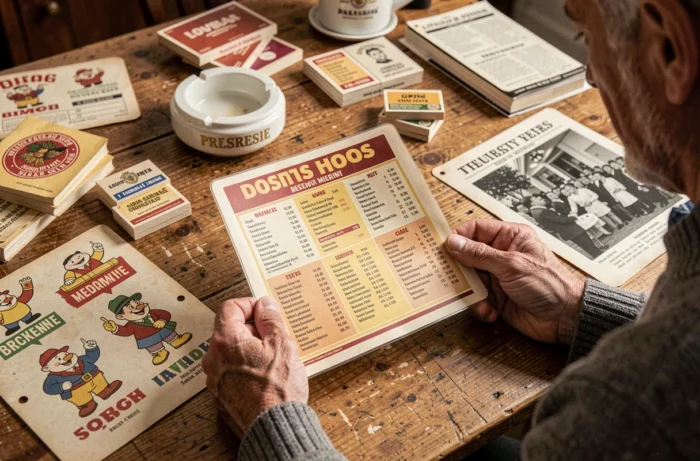
Some initiatives attempt to preserve the memory of these brands. Collectors are digitizing old menu cards. Chefs are reviving iconic recipes (the béarnaise sauce from a certain grill, the gratin dauphinois from a certain buffet) to incorporate them into contemporary bistros.
New regulatory obligations and food transparency
The disappearance of chains coincides with a tightening of regulations. Since 2024, labeling obligations regarding the origin of meats have been expanded to more products in the restaurant sector. For establishments that sourced through opaque purchasing centers, this increased transparency represents an additional constraint.
Historical chains built their model on massive purchases at reduced costs, without necessarily highlighting traceability. Today’s consumers expect something different. They want to know where the meat on their plate comes from, how the fish was caught, and whether the vegetables are in season.
- Mandatory labeling of the origin of beef, pork, and poultry in dining rooms and on menus
- Gradual extension to dairy products and eggs used in cooking
- Stronger penalties for non-compliance, with more frequent inspections by the DGCCRF
This evolution benefits small establishments capable of promoting local sourcing. It complicates matters for chains whose model relies on centralization and logistical opacity.
The brands that survive this transition period will likely be those that manage to combine operational efficiency and transparency. The model of the French chain as we knew it is mutating, not simply disappearing. What is fading is a certain idea of the standardized collective meal, replaced by more segmented, faster formats, and sometimes more sincere about what they put on the plate.