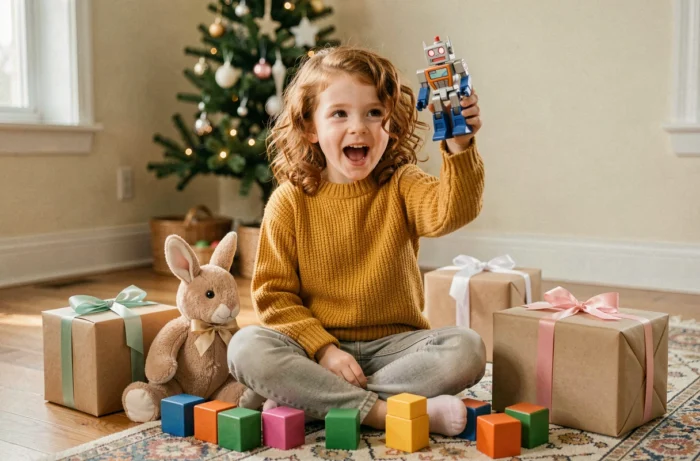
The toy market in Europe is undergoing profound changes. With a tightening regulatory framework and evolving parental expectations for safer and more sustainable products, choosing a toy or gift for a child in 2024 is no longer just about following current trends. The best ideas for children’s toys and gifts are now measured against criteria that classic lists rarely address.
Chemical Safety of Toys: What the New European Regulation Changes
The European regulation on toy safety, which replaces directive 2009/48/EC, introduces significantly stricter chemical restrictions. The bans extend to endocrine disruptors, PFAS, and most allergenic fragrances, with lower thresholds than those applied to general consumer products.
For toys intended for toddlers, where oral contact is common, these requirements take on particular significance. Raw wooden toys, organic cotton plush toys, or chemical-free construction games are gaining relevance, not as a trend, but because they anticipate a regulatory framework that is set to tighten.
Parents looking for gift ideas for children in 2024 should ensure compliance with EN 71 standards, which cover mechanical properties, flammability, and the migration of chemical elements. On kidits.fr, product sheets allow filtering by age group, making it easier to identify toys that meet safety criteria by category.
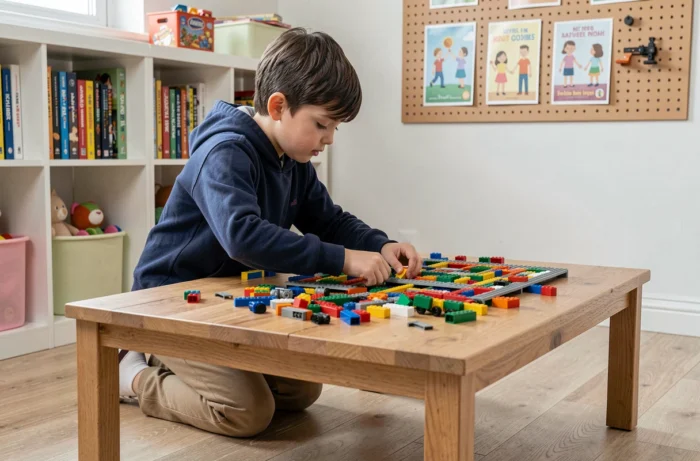
Connected Toys for Children: Technological Promises and Concrete Limits
Connected toys (interactive plush toys, educational robots, learning tablets) represent a growing share of gifts given. Their appeal lies in the promise of playful and personalized learning. However, they raise questions that traditional buying guides do not always address.
The collection of personal data by these objects remains a sensitive point. The new European regulation specifically targets connected toys by strengthening traceability and compliance obligations. Starting August 1, 2030, all toys sold in the EU will need to have a digital product passport, accessible via a QR code on the packaging.
This passport will centralize safety information, composition, and recall history. For a gift purchased in 2024, this means that a connected toy from a brand that is not transparent about its components could be off the market in a few years, with no spare parts or software updates.
Criteria to Check Before Buying a Connected Toy
- The presence of the CE marking and compliance with EN 71 standards, which confirm that the toy has passed European safety tests
- The manufacturer’s data policy: what information is collected, where is it stored, and can the child use the toy offline
- Software durability: does the manufacturer commit to maintaining the app associated with the toy for several years
Construction Games and Wooden Toys: A Comeback That Goes Beyond Nostalgia
Lego remains a safe bet. The Notre Dame de Paris set from the Lego Architecture range was even awarded the jury’s favorite at the 2024 Toy Grand Prix. But beyond this iconic brand, wooden or recycled material construction games are gaining ground on Christmas lists.
This movement is not solely driven by ecological sensitivity. Wooden toys, assembly kits for cabins, or board games made from recycled cardboard better meet the new chemical requirements, as they use fewer plasticizers and synthetic coatings.
Board games are also experiencing a marked resurgence of interest. For children aged 5 to 12, they combine social interaction, development of logical thinking, and shared family fun. A well-chosen board game remains the gift with the best lifespan-to-price ratio.
Gift for Child by Age: Common Mistakes to Avoid
The most common pitfall is giving a toy above the recommended age range, thinking it will stimulate the child. Age indications on packaging are not marketing suggestions: they stem from standardized tests concerning choking hazards (small parts), mechanical resistance, and material toxicity.
- Under 3 years: prioritize toys without small detachable parts, made from soft materials and compliant with the strictest chemical migration tests
- Ages 3 to 6: creative kits (modeling clay, drawing, simple construction) stimulate fine motor skills, provided that allergenic fragrances are absent from the components
- Ages 6 to 12: advanced construction games, strategic board games, and science kits match the cognitive abilities of this age group
Giving a toy appropriate for the child’s actual age protects both their safety and their enjoyment of play. A toy that is too complex ends up in a closet, while a toy that is too simple becomes boring in a few minutes.
The Second-Hand Market as an Alternative
Second-hand toy resale platforms are experiencing notable growth. For construction games like Lego or wooden toys, buying second-hand is a relevant option: these products withstand wear well and retain their play value. Field reports diverge on this point for electronic toys, whose lifespan heavily depends on the condition of internal components.
Choosing a toy or gift for a child in 2024 should incorporate regulatory dimensions and product durability. Trends come and go, but a safe toy, age-appropriate, and made with materials compliant with the new standards remains the foundation of a good gift, this year and in the years to come.