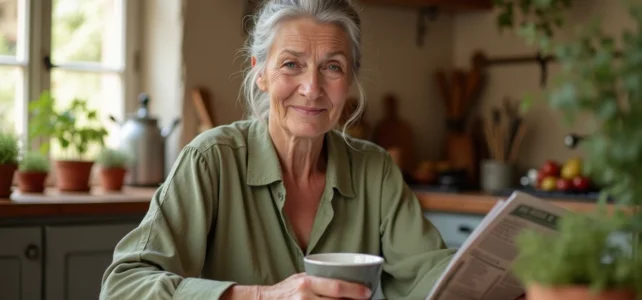
Aging well is not just about the absence of disease. The World Health Organization defines healthy aging as the maintenance of functional abilities that allow individuals to do what matters to them: moving around, eating properly, and staying connected with others. For seniors, preserving these abilities on a daily basis relies on specific levers, some of which have been recently reevaluated by French health authorities.
Longevity assessment from age 50: a recent recommendation from the Academy of Medicine
The National Academy of Medicine now recommends that a healthy longevity assessment be offered to anyone aged 50 and over. This assessment is not limited to a standard check-up: it includes a health self-questionnaire and a self-screening of intrinsic capacities inspired by the WHO’s ICOPE program.
The intrinsic capacities evaluated cover mobility, cognition, vision, hearing, and vitality. The goal is to detect a decline before it becomes irreversible, at a stage where simple adjustments (rehabilitation, hearing correction, dietary adaptation) can still reverse the trajectory.
This approach marks a shift in logic: rather than waiting for a loss of autonomy to react, the healthcare system is beginning to structure prevention upstream. The senior information on Santé 365 details several of these preventive axes applied in daily life.

Malnutrition in seniors: an underestimated risk that accelerates loss of autonomy
Malnutrition affects a significant proportion of elderly people, including those living at home. The issue does not solely stem from a lack of appetite. With age, the sensation of fullness arrives more quickly, the perception of thirst decreases, and the energy expenditure for the same physical activity increases compared to a younger adult.
Protein intake is the critical point. Muscle mass naturally decreases with age (a process called sarcopenia), and insufficient protein intake accelerates this loss. Consuming eggs, meat, fish, or legumes at each main meal helps slow down this mechanism.
Concrete nutritional guidelines for seniors
- Maintain three meals a day and add nutrient-rich snacks (yogurts, fruits, cheese) to compensate for early satiety.
- Drink regularly without waiting for thirst: water, herbal teas, and soups, as dehydration in seniors often occurs insidiously.
- Combine dairy products with physical activity so that the ingested calcium actually binds to the bone, rather than being eliminated.
- Vary sources of fats by favoring vegetable oils and fatty fish, which contribute to maintaining cognitive functions.
Malnutrition is not an issue reserved for people in institutions. A senior living alone, whose meals gradually simplify, can transition in a few months to a state of fragility that is difficult to recover from.
Physical activity after 60: adapt the intensity rather than give up
Physical activity remains the most documented lever for preserving autonomy and reducing the risk of chronic diseases in seniors. A common pitfall is to abandon all activity at the first joint problem, whereas the challenge is to adapt the type and intensity of the effort.
Brisk walking, swimming, or cycling at moderate resistance engages the cardiovascular system without overloading the joints. Muscle strengthening exercises (with resistance bands, light weights, or body weight) are at least as useful as endurance: they directly combat sarcopenia and improve balance, thus reducing the risk of falls.
Balance and fall prevention
Falls are one of the leading causes of loss of autonomy in older adults. Targeted exercises (single-leg support, heel-to-toe walking, tai chi) strengthen postural reflexes. Working on balance three times a week significantly reduces the risk of falling.
Collective prevention workshops, which combine adapted physical activity and social connection, are developing in many French municipalities. They help maintain a regularity that solitary practice often struggles to guarantee.

Law of May 26, 2026: what changes for the support of elderly people
A recent regulatory evolution deserves the attention of seniors and their families. The French law of May 26, 2026 imposes new obligations on healthcare facilities and social and medico-social establishments and services (ESSMS) to ensure equal access to palliative care and support.
The concept of palliative care is expanding: it now includes comfort care, supportive care, and comprehensive assistance for daily living at the end of life. For elderly individuals experiencing loss of autonomy, this means a strengthened right to support that is not limited to the strict medical framework.
At the same time, the Autonomy branch of Social Security continues in 2025 to simplify administrative procedures related to the personalized autonomy allowance and requests to MDPH. This simplification aims to reduce the time between the detection of a need and the effective implementation of assistance.
Cognitive health and social connection: two often neglected pillars
The maintenance of cognitive functions does not solely depend on genetics. Regular intellectual stimulation (reading, strategy games, learning a new skill) helps maintain brain plasticity. But it is social connection that plays the most powerful protective role against cognitive decline.
Chronic isolation increases the risk of depression and accelerates the loss of autonomy. Participating in group activities, maintaining regular exchanges with one’s surroundings, or getting involved in a local association are measurable protective factors.
Shared prevention workshops, which are multiplying across France, combine physical, cognitive, and social stimulation in a single weekly session. This integrated format corresponds to what research in geriatrics identifies as the most effective strategy for delaying fragility.
Aging well relies less on a rigid program than on the ability to detect early signs of decline and to act on multiple levers simultaneously. The longevity assessment recommended by the Academy of Medicine, a sufficiently rich protein diet, adapted physical activity, and maintaining social connections form a foundation where each component reinforces the others.