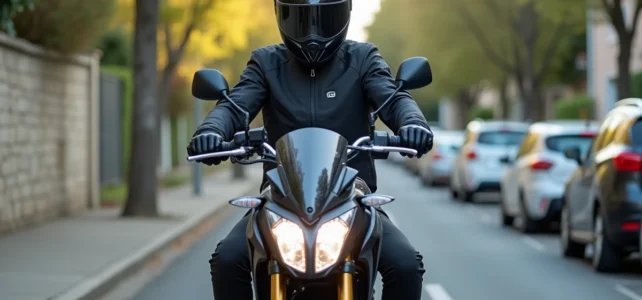
Since 2011, holders of a category B driving license can access the operation of a 125 cm³ motorcycle or scooter under certain conditions. The system relies on additional training and a minimum duration of holding the car license. These rules, sometimes misunderstood, deserve a precise examination, especially since their legal scope does not extend beyond French borders.
Category B License and 125 cm³: An Equivalence That Only Works in France
The point that French practical guides overlook concerns the geographical validity of this equivalence. The possibility of riding a light motorcycle with a category B license and a seven-hour training course is a strictly national provision, enshrined in the French Highway Code.
Spain, for example, also allows the operation of a 125 with a category B license (after three years and a specific course), but the Spanish DGT specifies that this authorization is only valid on Spanish territory. To ride abroad, an internationally recognized A1 or A2 license remains necessary. The situation is similar in Italy, where the patente B allows riding a 125 within A1 limits, only on Italian soil.
A French driver crossing the border with their 125 and only a category B license thus takes a real legal risk. Field reports vary: some motorcyclists report never having been checked, while others have been fined in Belgium or Switzerland. The lack of mutual recognition among member states on this specific issue is documented.
Those wishing to delve deeper into the regulatory framework will find useful details in the 125 License Training on Auto l’Hebdo, which outlines the legal conditions applicable in France.
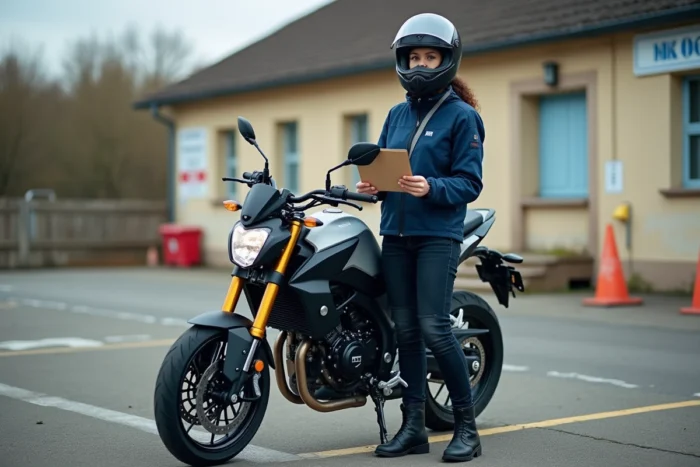
Duration of the Category B License and Date of Issue: Two Distinct Criteria
The most frequent confusion concerns the difference between the required duration and the key date of March 1, 1980. These are two separate rules that either accumulate or exclude each other depending on the profiles.
- Holders of a category B license obtained before March 1, 1980 can ride a 125 cm³ without any additional training, regardless of their motorcycle driving experience.
- Holders of a category B license obtained after this date must have at least two years of experience on their car license before they can take the seven-hour training course.
- An exemption from training exists for drivers who can prove they have insured and ridden a 125 cm³ during the five years preceding 2011, the date the training requirement came into effect.
This exemption is justified by an insurance information statement covering the relevant period. Without this document, the seven-hour training remains mandatory, even for an experienced motorcyclist who may have simply let their two-wheeler insurance lapse.
Seven-Hour Training for 125 Motorcycles: Content and Educational Limits
The training is divided into three modules: theory, off-road practice (platform), and on-road practice. Are seven hours really sufficient to prepare a motorist for riding a powered two-wheeler? The question divides road safety professionals.
The theoretical module lasts about two hours. It covers the specifics of motorcycle riding: positioning on the road, braking distances, blind spots of heavy vehicles. The platform then takes two hours, dedicated to handling the vehicle, starting, low-speed balance, and emergency braking.
The remaining three hours take place in real traffic. The instructor communicates via radio with the student and corrects their trajectory, positioning, and decision-making in real time. At the end of the training, no exam is required: a certificate is issued by the driving school, which serves as authorization to ride.
What the Training Does Not Cover
Seven hours do not allow for an in-depth discussion of braking on wet surfaces, night riding, or obstacle avoidance at high speeds. The format is designed as an initiation, not as a complete preparation. Specialized driving schools often recommend additional practice hours, charged separately.
The training certificate must be kept with the license during each journey. In case of a check, the absence of this document exposes one to a fine. The insurance information statement mentioning the category of the insured vehicle may also be requested.
125 Motorcycle Insurance with Category B License: An Underestimated Point of Caution
Obtaining insurance for a 125 cm³ operated with a category B license does not pose technical difficulties, but the pricing conditions vary significantly depending on the driver’s profile. A motorist with no motorcycle history will be considered a novice rider by most insurers, even if they have been driving a car for twenty years.
The auto bonus-malus does not automatically transfer to the motorcycle contract. Each insurer applies its own policy on this point. The starting coefficient on a first motorcycle contract is generally neutral, which means a higher premium than that of an experienced motorcyclist with several years of bonuses.
Ensuring that the contract explicitly covers the category “light motorcycle operated with a category B license and training certificate” avoids any disputes in case of a claim. A vague mention or the absence of reference to the certificate can serve as grounds for denial of compensation.
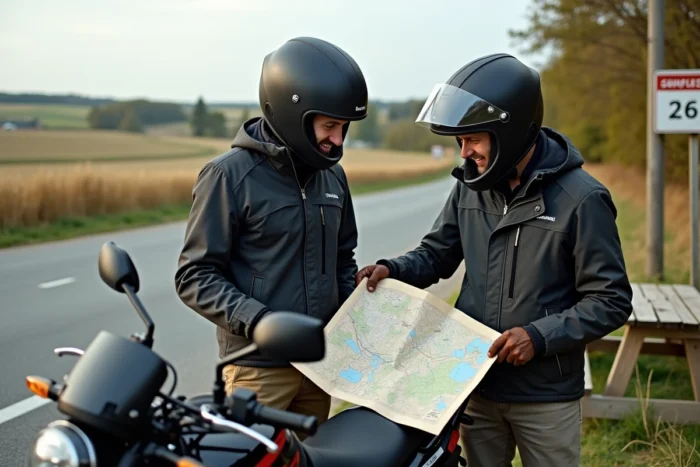
European Trend: Towards Stricter Regulation of 125 with Category B License
Several countries are tightening the conditions for accessing 125 via the car license. Turkey recently published an amendment to the traffic regulations requiring at least two years of license, satisfactory medical conditions, no license suspension in the previous five years, and one to two additional driving courses.
This trend reflects a shared observation: short training does not compensate for the lack of motorcycle experience. In France, no reform is announced at this stage, but the subject regularly comes up in discussions about the road safety of powered two-wheelers. Drivers considering riding regularly on a 125 cm³ would do well to consider obtaining a full A1 license, which offers international recognition and more comprehensive training.