
Gibraltar, a British territory of just a few square kilometers attached to the southern tip of the Iberian Peninsula, records an annual volume of civil marriages that is disproportionate to its size. The local legal framework, inherited from English law, allows couples of all nationalities to unite with minimal formalities. For French couples, this option raises specific questions: validity of the act in France, transcription procedure, potential limits of the system.
What English law in Gibraltar changes for a French couple
Civil marriage in Gibraltar is based on the local Marriage Act, inspired by English law. The fundamental difference with the French procedure lies in the absence of the publication of banns and the removal of the prolonged residency requirement. Just one night on the territory is enough to fulfill the presence obligation before the ceremony.
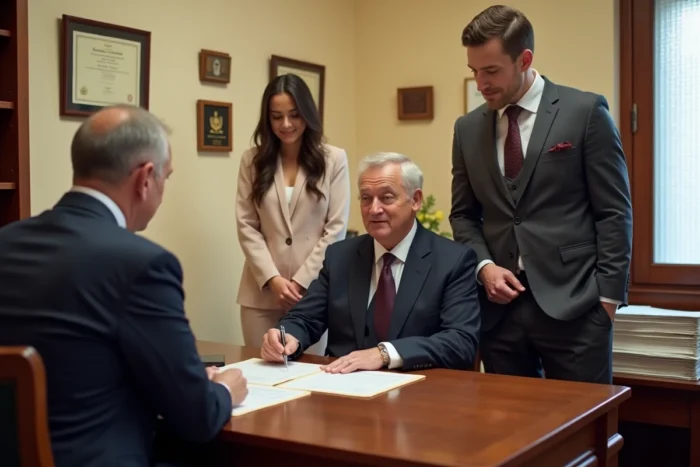
The couple submits a file to the registrar (civil status officer) of Gibraltar. The ceremony itself, conducted in English, lasts a few minutes. The officiant hands over a marriage certificate in English, an official document that serves as proof of the union.
For a couple residing in France, this certificate does not have automatic value on French territory. An additional step, transcription, is required to transform the foreign act into a French civil status act. This point, often glossed over in practical guides, deserves attention. A guide detailing the advantages of marriage in Gibraltar helps to better understand the entire administrative process.
Transcription in France: the real administrative process
The transcription of a marriage celebrated in Gibraltar with the French civil status requires going through the competent French consulate or the Central Civil Status Service in Nantes. The couple must provide the Gibraltar marriage act, accompanied by a sworn translation and an apostille (international certification of the document).
Without transcription, the marriage exists legally but remains invisible to the French administration. The consequences are concrete: no family record book, no change in tax status, no inheritance rights related to the marriage under French law.
Delays and uncertainties
Transcription delays vary. Several weeks to several months depending on the workload of the service and the completeness of the file. In case of a missing document or doubt about the conformity of the act, the consulate may request additional information, which prolongs the procedure.
Field reports differ on this point: some couples report a completed transcription in a few weeks, while others describe administrative exchanges over several months. The available data does not allow for a reliable average timeframe.
Documents required to marry in Gibraltar
The file to be prepared before departure remains the most technical step. The requirements of the registrar in Gibraltar differ from those of a French town hall, but they remain relatively light.
- Valid passport for each member of the couple (no identity card alone).
- Recent birth certificate, translated into English by a sworn translator.
- If one of the spouses has been previously married: final divorce decree or death certificate of the previous spouse, also translated.
- Marriage application form (notice of marriage) to be submitted to the registrar, ideally several weeks before the desired date.
Booking a ceremony slot is done directly with the Gibraltar registration office. During peak periods, slots may become scarce. Anticipating the reservation by several weeks remains a reasonable precaution.
Marriage in Gibraltar and binational or same-sex couples
Gibraltar allows marriage between same-sex individuals, a point that has increased the territory’s attractiveness for couples coming from countries where this union is not recognized. For French same-sex couples, the question is less pressing since the 2013 law in France, but Gibraltar remains an option for binational couples from countries that do not recognize this type of union.
Couples composed of two different nationalities also find a practical advantage in Gibraltar: the procedure does not discriminate based on nationality, and the marriage certificate in English facilitates its recognition in many countries. However, effective recognition still depends on the law of the country where the couple wishes to assert their union.
The “double marriage” model
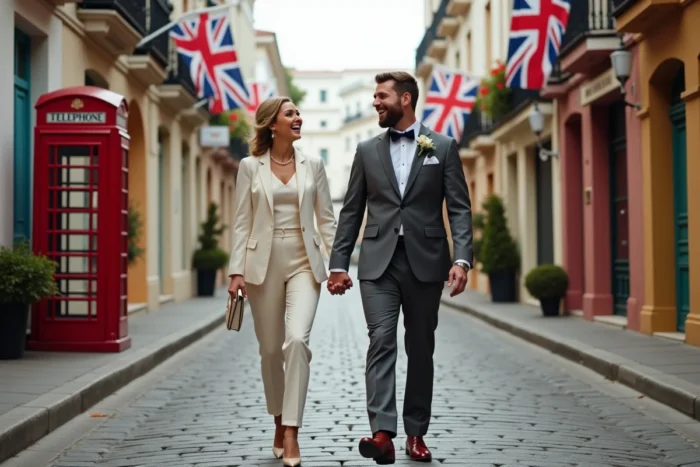
An increasingly documented scheme in the media consists of celebrating the civil marriage in Gibraltar and then organizing a party or symbolic ceremony in the country of origin. This process allows for securing the legal union quickly while maintaining the festive and familial aspect at a later time.
This model has gained visibility thanks to French reality TV shows, where participants have publicly discussed a “double marriage in Gibraltar” project. The media effect has contributed to popularizing this approach among a wider audience.
Limits and points of caution regarding Gibraltar marriage
The current framework works, but several limits deserve to be clearly stated.
- The ceremony is conducted entirely in English. No simultaneous translation is provided by the registrar. The couple must understand the commitments they are making.
- The overall cost (sworn translations, apostille, travel, accommodation, possible agency fees) exceeds that of a civil marriage at a French town hall, where the ceremony is free.
- The European regulatory context is evolving. Several discussions at the Union level are focused on cross-border arrangements perceived as forms of circumventing national rules. In the medium term, the conditions for recognizing marriages concluded abroad could become stricter, although nothing concrete has been voted on at this stage.
Marriage in Gibraltar meets a real need for simplification for couples facing administrative blockages, scheduling constraints, or complex family situations. The procedure remains accessible, but it involves serious documentary preparation work and vigilance regarding the transcription step, without which the union remains legally invisible in France.